An Italian composer remembered almost entirely for his hundreds of one-movement keyboard sonatas.
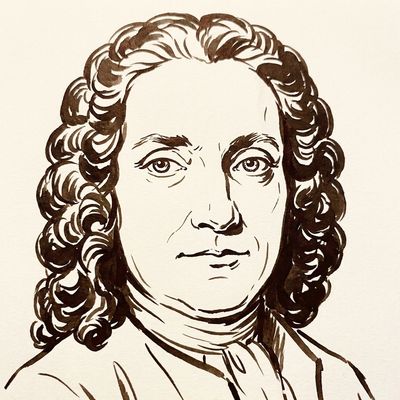
Domenico Scarlatti was born in Naples in 1685 — the same year as Bach and Handel — into a celebrated musical family. He spent much of his working life on the Iberian peninsula, in the service of the Portuguese and then the Spanish royal courts, where he taught the princess who later became Queen Maria Barbara of Spain. Most of his surviving music was written far from the main currents of European fashion.
He is remembered almost entirely for his keyboard sonatas — more than five hundred of them, each a single movement, most lasting only a few minutes. They are full of invention: crossed hands, quick repeated notes, and rhythms and guitar-like figures that echo the folk and dance music of Spain. Written for the harpsichord, they translate beautifully to the piano and are a favourite way to build agility.
Their brevity is a gift to the learner, who can take on a single sonata as a complete, satisfying piece rather than a long movement. Some of the slower sonatas are quite approachable, while the fast ones offer a lifetime of technical challenge. Scarlatti is where many pianists first learn to sparkle.